Managers often play a key role in supporting employee wellbeing and overall workplace wellbeing. Because they work closely with their teams, they are often the first to notice when someone may be struggling with workplace stress, personal stress, burnout, or other employee mental health challenges.
At the same time, many managers feel uncertain about what they should say or do in these situations. They may worry about saying the wrong thing, overstepping boundaries, or getting involved in something that feels outside their role.
The good news is that managers do not need to be mental health experts to support their employees. What matters most is responding with empathy, listening carefully, and connecting employees with the right resources.
Recognizing Signs That an Employee May Be Struggling
Not every employee will openly share when they are experiencing mental health challenges. In many cases, managers may first notice changes in behavior or performance.
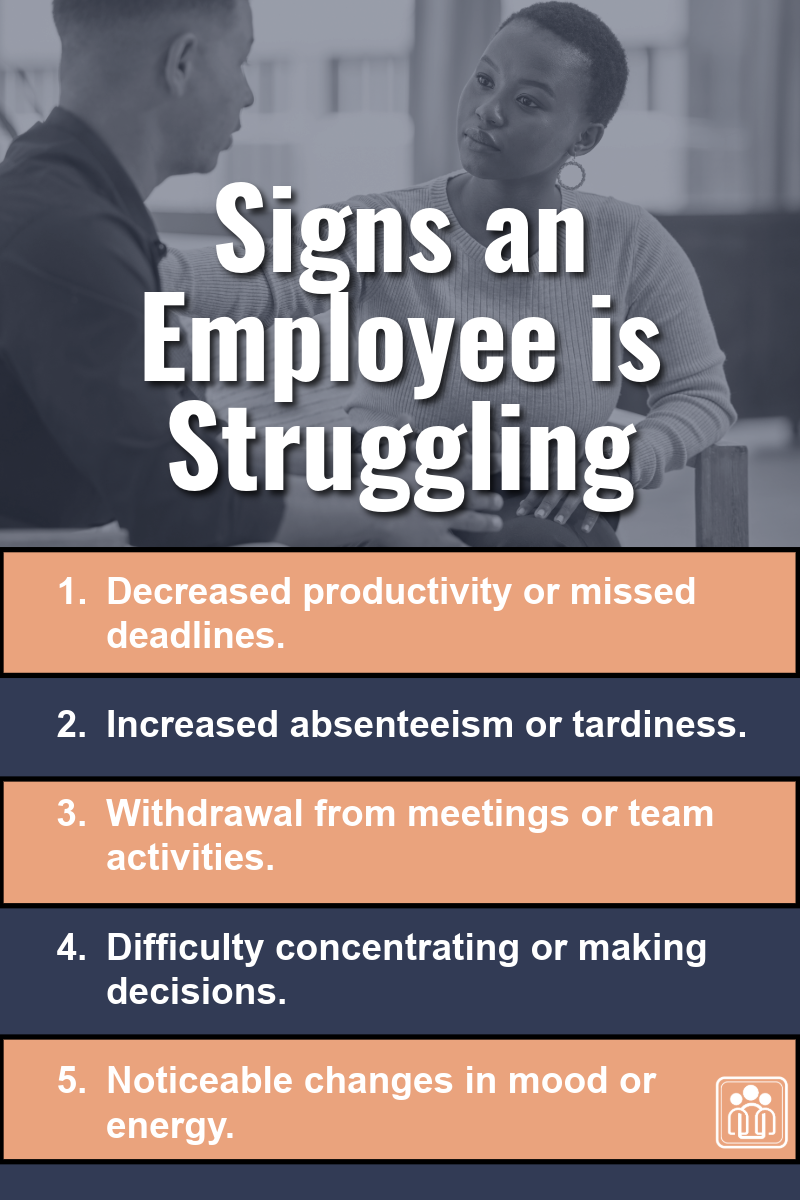
What are some common warning signs?
These may include:
- Decreased productivity or missed deadlines
- Increased absenteeism or tardiness
- Withdrawal from meetings or team activities
- Difficulty concentrating or making decisions
- Noticeable changes in mood or energy
These signs do not automatically mean someone is experiencing a mental health issue, but they may indicate that the employee is under stress and could benefit from support.
Start with a Supportive Conversation
If a manager notices concerning changes, a simple and supportive conversation can make a meaningful difference.
The goal is not to diagnose or solve the problem, but to check in and show concern.
A manager might say something like:
“I’ve noticed you seem a little overwhelmed lately. I wanted to check in and see how you’re doing and if there’s anything I can do to support you.”
This approach keeps the conversation focused on observable behaviors rather than assumptions about someone’s mental health.
During the conversation, managers should focus on listening. Allow the employee to share as much or as little as they feel comfortable discussing.
Respect Privacy and Avoid Overstepping
Employees are not required to disclose personal health information to their managers, and some may prefer to keep details private.
Managers should avoid asking intrusive questions or pressing employees for personal explanations. Instead, they can focus on work-related concerns and possible support options.
If an employee does share personal information about a mental health challenge, managers should treat that information confidentially and only involve HR when appropriate.
Connect Employees with Available Resources
Managers do not need to handle mental health concerns alone. Most organizations offer resources that can support employees, such as Employee Assistance Programs (EAPs), office mental health resources, mental health benefits, or HR support.
If an employee is struggling, a helpful response might be:
“Our company has some resources that might be helpful. I can connect you with HR or share information about the Employee Assistance Program if you’d like.”
This ensures the employee is aware of available support while directing the conversation toward the appropriate channels.
Know When to Involve HR
In some situations, HR should be involved to ensure employees receive proper support and the organization remains compliant with workplace policies and laws.
Managers should involve HR when:
- An employee requests a workplace accommodation
- Performance concerns are connected to a health issue
- The employee expresses serious distress or difficulty functioning at work
- There are questions about leave options or workplace adjustments
HR professionals can help guide the process, including any necessary documentation or accommodations.
Model Healthy Work Habits
Managers also influence team wellbeing and broader workplace wellbeing through their own behavior. When leaders demonstrate healthy work habits, it sends a powerful message to employees that wellbeing matters.
This may include:
- Encouraging employees to take breaks and use their vacation time
- Respecting boundaries around after-hours communication
- Being realistic about workload expectations
- Promoting open conversations about stress and workload challenges
Small actions from managers can help create a work environment where employees feel supported and respected.
Final Thought
Employee mental health is an important workplace issue, and managers can play a role. However, managers don’t need to have all the answers when an employee is struggling, whether it’s with workplace stress or personal issues. What employees often need most is a manager who listens, responds with empathy, and helps them connect with the right support.
When managers are equipped with the tools and confidence to handle these conversations, organizations are better positioned to support employee wellbeing while maintaining a healthy and productive workplace.
Q&A Summary
Question: What are common warning signs that an employee may be struggling?
Short answer: Managers might notice decreases in productivity or missed deadlines, increased absenteeism or tardiness, withdrawal from meetings or team activities, difficulty concentrating or making decisions, and noticeable changes in mood or energy. These signs don’t automatically mean there’s a mental health issue, but they can indicate stress and a need for support.
Question: How should a manager start the conversation when they notice concerning changes?
Short answer: Begin with a supportive, nonjudgmental check-in focused on observable behaviors. For example: “I’ve noticed you seem a little overwhelmed lately. I wanted to check in and see how you’re doing and if there’s anything I can do to support you.” Listen more than you talk, avoid trying to diagnose or “fix” the problem, and let the employee share only what they’re comfortable sharing.
Question: How can managers respect privacy and avoid overstepping?
Short answer: Don’t press for personal or medical details—employees are not required to disclose them. Keep the conversation centered on work-related observations and potential supports. If personal information is shared, treat it confidentially and involve HR only when appropriate.
Question: What resources can managers connect employees with, and do managers need to be mental health experts?
Short answer: Managers can point employees to available supports such as Employee Assistance Programs (EAPs), mental health benefits, office mental health resources, or HR. A helpful approach is: “Our company has some resources that might be helpful. I can connect you with HR or share information about the Employee Assistance Program if you’d like.” Managers don’t need to be experts; empathy, good listening, and connecting employees to the right resources are what matter most.
Question: When should a manager involve HR?
Short answer: Involve HR when an employee requests a workplace accommodation, when performance concerns are connected to a health issue, when the employee expresses serious distress or difficulty functioning at work, or when there are questions about leave options or workplace adjustments. HR can guide next steps, documentation, and accommodations.