Employee mental health has become one of the most important issues facing today’s workplaces. Rising levels of stress, burnout, and anxiety are affecting employees across industries, and organizations are increasingly recognizing that mental wellbeing is closely tied to productivity, engagement, and retention.
Supporting employee mental health does not require employers to become therapists. Instead, it means creating a workplace culture, policies, and resources that make it easier for employees to manage challenges and seek help when they need it.
Organizations that take a proactive approach to mental wellbeing often see benefits not only for employees, but also for overall organizational performance.
Create a Workplace Culture Where Mental Health Conversations Are Safe
One of the most powerful ways employers can support employee mental health is by normalizing conversations about it. Many employees still hesitate to speak openly about stress, anxiety, or emotional challenges at work because they worry about stigma or being perceived as less capable.
Leaders play an important role in setting the tone. When managers acknowledge that mental health matters and encourage open dialogue, it signals to employees that their wellbeing is valued.
Organizations can also reinforce this culture by:
- Including mental health topics in workplace communications
- Offering mental health awareness training
- Encouraging leaders to model healthy boundaries and work-life balance
A culture that treats mental health as a normal part of overall wellbeing helps employees feel more comfortable seeking support before challenges escalate.
Train Managers to Recognize and Respond to Concerns
Managers are often the first people to notice when an employee is struggling. Changes in behavior, performance, or engagement may signal that someone is experiencing stress or burnout.
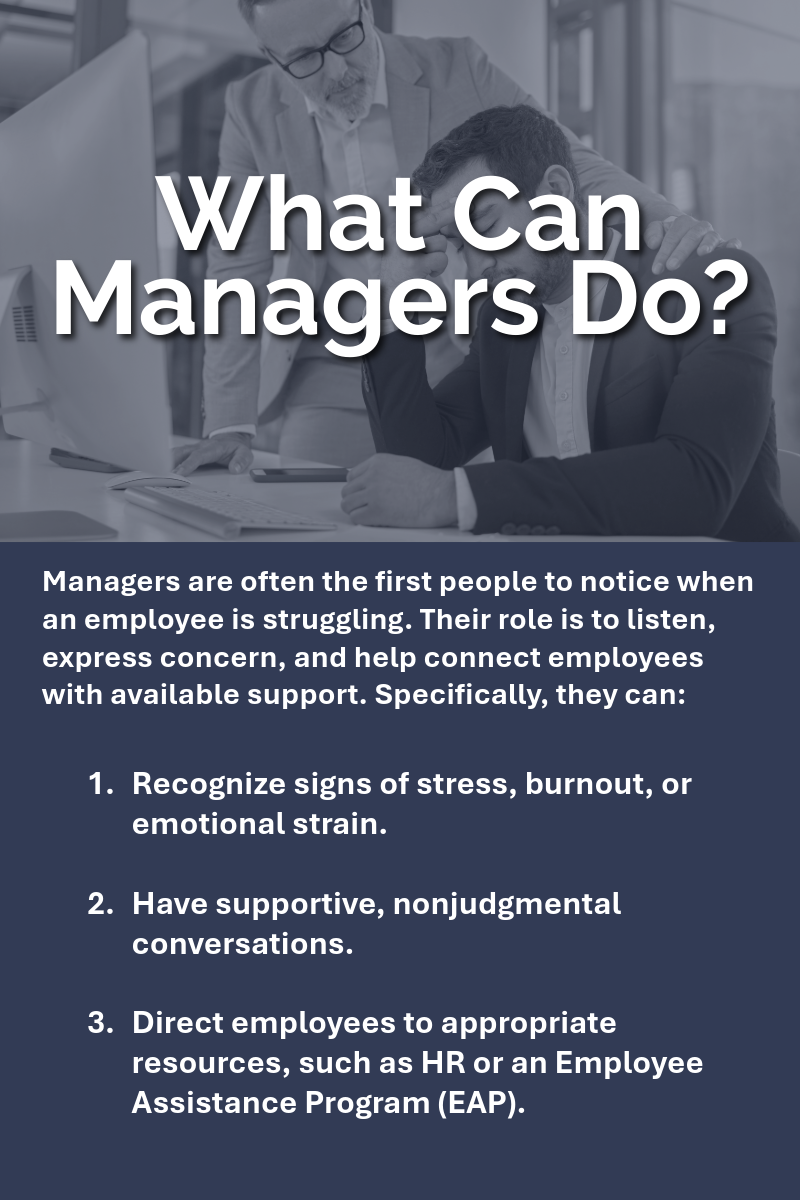
However, many managers feel unsure about how to respond in these situations.
Providing managers with basic training can help them:
- Recognize signs of stress, burnout, or emotional strain
- Have supportive, nonjudgmental conversations
- Direct employees to appropriate resources such as HR or an Employee Assistance Program (EAP)
Managers are not expected to diagnose or solve mental health issues. Their role is to listen, express concern, and help connect employees with available support.
Promote Work-Life Balance
Workplace expectations can significantly affect employee wellbeing. Excessive workloads, unrealistic deadlines, and constant connectivity can contribute to chronic stress and burnout.
Employers can help reduce these pressures by promoting healthier work habits, such as:
- Encouraging employees to take regular breaks and use their paid time off
- Setting reasonable expectations around after-hours communication
- Offering flexible scheduling or hybrid work options when possible
When employees feel they have control over their schedules and adequate time to recharge, it can have a meaningful impact on mental wellbeing.
Provide Access to Mental Health Resources
Many organizations offer benefits that support mental health, but employees may not always know how to access them.
Common workplace resources include:
- Employee Assistance Programs (EAPs)
- Mental health counseling through health insurance plans
- Wellness programs or stress management workshops
- Digital mental health tools and apps
Employers should regularly communicate about these resources and ensure employees understand how to use them. Clear communication can increase utilization and help employees access support sooner.
Encourage Peer Support and Connection
Workplace relationships also play an important role in employee mental health. Employees who feel connected to their colleagues and supported by their teams are often more resilient when facing challenges.
Organizations can encourage connection by creating opportunities for collaboration, team engagement, and informal social interaction. Mentorship programs, employee resource groups, and team-building activities can all contribute to a stronger sense of belonging.
Recognize the Link Between Employee Mental Health and Workplace Policies
Policies related to workload, time off, and performance expectations can either support or undermine employee wellbeing.
Employers should periodically review workplace policies to ensure they align with a healthy work environment. For example, organizations may consider:
- Providing mental health days as part of paid time off policies
- Offering flexible work arrangements where feasible
- Ensuring fair and manageable workload distribution
Small policy adjustments can make a significant difference in building a stronger workplace culture, reducing stress and supporting long-term employee wellbeing.
Final Thought
Supporting employee mental health is not a single initiative—it’s an ongoing commitment. By fostering open conversations, training managers, promoting work-life balance, and ensuring access to resources, employers can create a workplace where employees feel supported both personally and professionally.
When organizations prioritize mental wellbeing, they not only help employees thrive but also build stronger, more resilient workplaces.