A lot of employers still think of Form I-9 as routine hiring paperwork. Fill it out during onboarding, file it away, and move on. What used to feel like routine paperwork has become a much bigger compliance risk.
In recent years, workplace immigration enforcement and ICE audits have increased steadily, and employers are facing more investigations and financial penalties tied to hiring and employment verification practices. In many cases, the issue isn’t knowingly hiring unauthorized workers; it’s years of small administrative mistakes that finally surface during an audit.
For HR teams already balancing recruiting, onboarding, compliance, retention, and employee relations, it’s easy for I-9 processes to become inconsistent over time. Different managers handle paperwork differently, remote hiring creates new challenges, and internal reviews often get pushed aside until there’s a problem. Unfortunately, by the time a company realizes there’s an issue, the exposure can already be significant.
More Employers Are Facing Audits
Federal agencies continue increasing workplace enforcement efforts, particularly in industries with large workforces, multiple locations, seasonal hiring, or high turnover.
Industries receiving the most attention include:
- Construction
- Hospitality
- Manufacturing
- Healthcare
- Staffing and recruiting
- Warehousing and logistics
- Food production and processing
Many employers are also seeing more unannounced workplace inspections and tighter timelines to produce records once an audit notice is issued.
What catches companies off guard is that enforcement actions often start with the paperwork. Before anything else, agencies typically review Form I-9 records, onboarding procedures, and employment verification practices. If forms are incomplete, inconsistent, or have missing information, or are stored improperly, it can quickly become a larger issue.
Small Mistakes Can Turn Into Expensive Problems
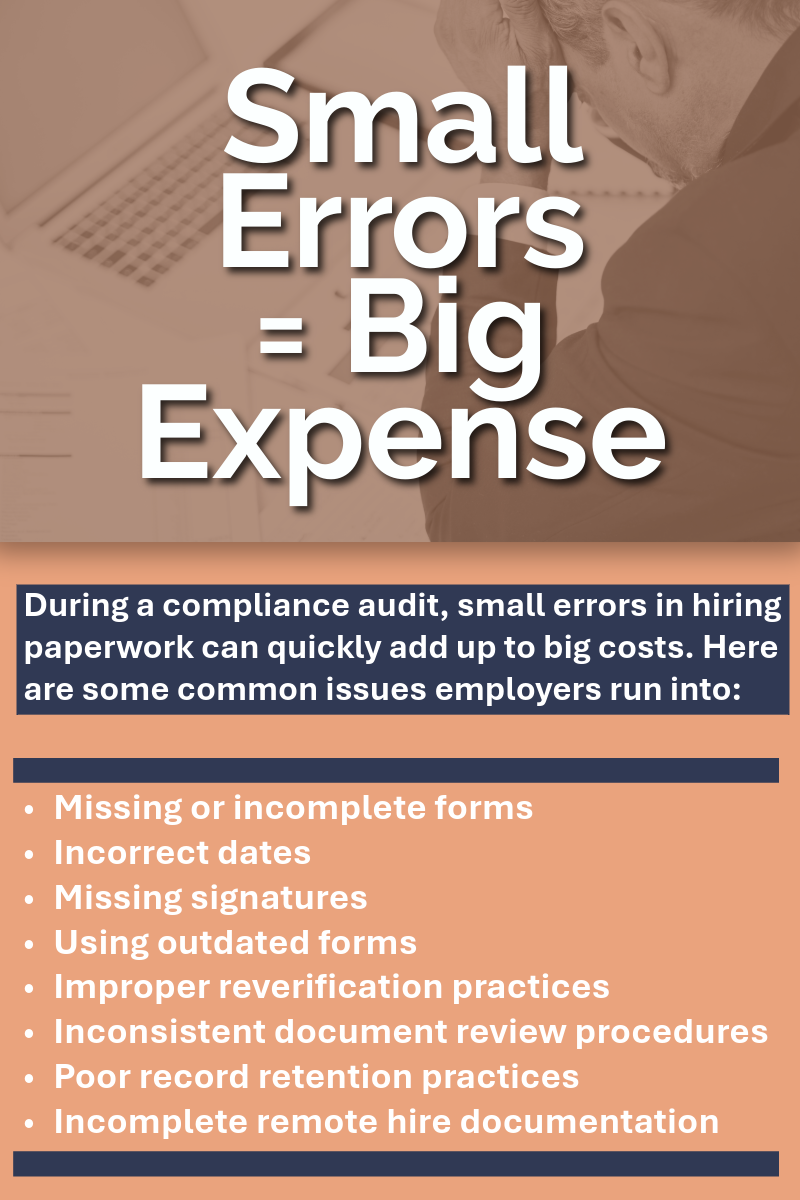
One missing signature may not seem like a major issue internally. Neither does a missed date, an outdated version of the form, or a section completed late. But during an audit, those small errors can add up quickly.
Some of the most common issues employers run into include:
- Missing or incomplete forms
- Incorrect dates
- Missing signatures
- Using outdated forms
- Improper reverification practices
- Inconsistent document review procedures
- Poor record retention practices
- Incomplete remote hire documentation
Most of these problems are not intentional. They usually happen because processes evolve over time, managers receive inconsistent training, or companies simply haven’t reviewed their files recently.
Still, enforcement agencies generally expect employers to have organized, accurate, and compliant records regardless of intent.
Recent Enforcement Highlights the Risks for Employers
In one recent high-profile case, a worldwide retailer was accused of more than 11,000 Form I-9 recordkeeping violations across multiple locations after federal inspections uncovered alleged issues with electronic records and verification procedures. The proposed penalties reportedly exceeded $24 million, making it one of the more closely watched workplace immigration compliance cases in recent years.
Cases like this are drawing attention because they show how quickly compliance issues can escalate, especially when employers rely heavily on electronic systems or decentralized hiring processes.
The reality is that businesses of every size are vulnerable if their procedures are inconsistent or outdated.
Remote Hiring Has Made Compliance More Complicated
Remote and hybrid work environments have added another layer of complexity for employers trying to stay compliant. Many organizations are still working through questions around:
- Proper remote document verification
- Electronic I-9 system compliance
- Storage and retention requirements
- Multi-location consistency
- Reverification tracking
- Manager training and accountability
What makes this difficult is that inconsistencies often go unnoticed until records are reviewed all at once during an audit or investigation. A process that seems manageable day to day can reveal major gaps when looked at across an entire workforce.
Compliance Is About More Than Having Forms on File
Employers are also seeing more lawsuits and investigations tied to how the verification process itself is handled.
That includes claims involving:
- Requesting too much documentation from employees
- Treating workers inconsistently during verification
- Improper use of E-Verify
- Discrimination concerns tied to work authorization reviews
- Retaliation claims related to immigration issues
That’s why I-9 compliance today is about more than simply completing forms. Employers also need consistent procedures, proper training, and documentation practices that can hold up under scrutiny.
Waiting Until There’s a Problem Usually Costs More
One of the biggest mistakes employers make is waiting until they receive an audit notice to review their process. By that point, there’s often very little time to correct years of accumulated issues.
The organizations in the best position are usually the ones taking a proactive approach by:
- Reviewing existing forms regularly
- Updating onboarding procedures
- Training HR staff and managers
- Evaluating electronic systems
- Conducting internal audits
- Creating more consistent hiring practices across locations
Even identifying a few recurring issues early can prevent much larger problems later.
How IDHR Consulting Helps
At IDHR Consulting, we help employers strengthen hiring and onboarding compliance before issues become costly.
Our team works with businesses to:
- Conduct internal I-9 audits
- Identify compliance gaps and risk areas
- Review onboarding and verification procedures
- Train HR teams and hiring managers
- Support remote workforce compliance
- Assist with audit preparation and response – may take out
For most employers, the goal isn’t perfection. It’s creating a process that is organized, consistent, and defensible if questions ever arise.
Now Is a Good Time to Review Your Process
Many employers don’t realize there are issues with their I-9 procedures until an audit exposes years of avoidable mistakes. If your organization hasn’t reviewed its Form I-9 process recently, now is a good time to evaluate your compliance procedures and identify potential risk areas before an audit occurs.