Choosing the right HR technology is an important decision for any organization. Many companies use either a Human Resources Information System (HRIS) or a Human Capital Management (HCM) platform to manage employee information and HR processes. With so many vendors and options available, the process can feel overwhelming.
There is no one-size-fits-all answer. The best system is the one that fits your organization’s needs and future plans. Understanding what your organization needs early in the process will help you stay focused when comparing systems.
Understanding HRIS vs. HCM
Before beginning your search, it is helpful to understand the difference between an HRIS and an HCM system.
An HRIS is designed to hold employee data and handle administrative HR tasks. It stores important information such as employee records, payroll, benefits, and compliance documentation. HR teams use HRIS systems to keep accurate records and automate routine processes.
An HCM system includes the same features of an HRIS but adds tools to support the broader management and development of employees. These often include:
- Recruiting and hiring tools
- Performance management
- Learning and training programs
- Talent management
- Workforce planning
In simple terms, HRIS systems focus on managing employee data and HR operations, while HCM platforms take a more comprehensive view of managing and developing employees.
Many modern platforms combine features from both systems. Because of this, organizations often evaluate HRIS and HCM solutions together when choosing a new HR technology platform.
What Modern HR Platforms Can Do
Today’s HR systems often combine many HR tasks into one platform. Depending on the vendor, these systems may include tools for:
- Payroll processing
- Employee self-service
- Time and attendance tracking
- Benefits administration
- Hiring and onboarding
- Job performance
- HR reporting and compliance tracking
Some systems include all of these features in one package, while others let you add features as you need them. Since these systems help with every part of an employee’s time at a company, it is important to evaluate them carefully.
Start with an Internal Assessment
Before researching new systems, organizations should review their current HR processes and software. This helps identify what is working well and what needs improvement.
Consider asking questions such as:
- What are our biggest HR technology pain points?
- Which tasks require manual work or duplicate data entry?
- What features would make HR work easier for our team, managers, and employees?
It is also helpful to ask employees who regularly use the system for feedback. They often notice problems that managers may not see.
This process can help your organization create a list of must-have features when evaluating new platforms.
Understanding the Full Investment
When comparing HR systems, organizations should consider the total cost, not just the price of the software.
Other expenses may include:
- Implementation and system setup fees
- Ongoing subscription or licensing costs
- Training for HR staff and employees
- Ongoing system support and maintenance
Looking at the full investment helps organizations plan ahead and avoid unexpected costs.
Evaluate Vendors Carefully
Once you understand your needs and budget, you can begin reviewing vendors. Product demonstrations are helpful, but they usually highlight only the best features of the system.
Many organizations already use separate systems for payroll, benefits, and time tracking. It is important to understand how a new HRIS or HCM platform will work with these existing tools.
Vendors may focus on what their systems can do, but organizations should also ask about:
- System integrations
- Data migration from the current platform
- Implementation timelines
- Ongoing support
Asking detailed questions can help prevent problems later in the process.
Signs It May Be Time for a New System
Some organizations continue using older systems because switching seems difficult. However, certain issues may signal that it is time to explore a new HRIS or HCM platform.
Common warning signs include:
- Limited reporting capabilities
- Manual processes that should be automated
- Poor user experience for employees or managers
- Difficulty connecting with other HR systems
- Technology limitations that make it hard to grow
If these challenges are affecting efficiency or employees, it may be time to evaluate new options.
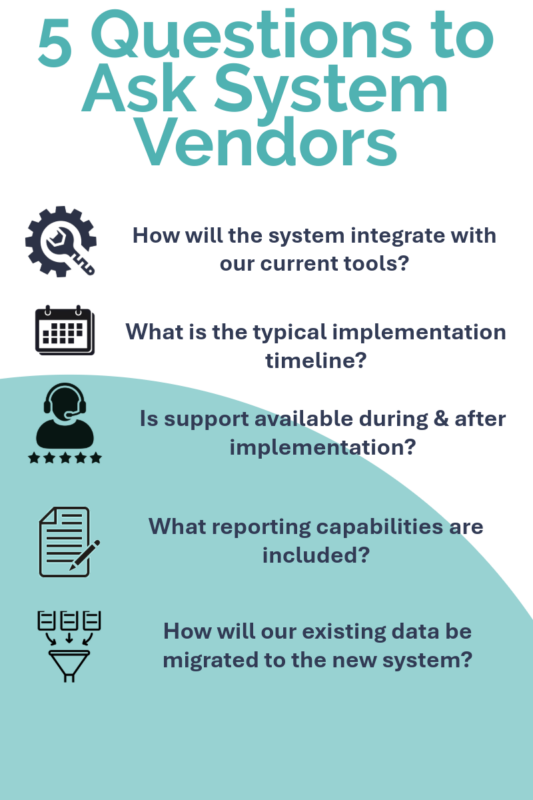
Five Questions to Ask HRIS or HCM Vendors
Asking the right questions can help you understand how the system will work once it’s in place.
1. How will the system integrate with our current tools?
- Understanding how data will move between systems can help prevent unexpected integration challenges.
2. What is the typical implementation timeline?
- Timelines vary based on system complexity and how prepared the organization is to make the transition.
3. What support is available during and after implementation?
- Clarifying training, implementation support, and ongoing assistance is essential.
4. What reporting capabilities are included?
- Strong reporting tools are essential for tracking HR data and making decisions.
5. How will our existing data be migrated to the new system?
- Understanding the historical data transfer process can help avoid problems during implementation.
The Value of Expert Guidance
Choosing and implementing an HRIS or HCM system can be complex. The process often includes vendor selection, system configuration, data migration, and employee training.
Many organizations find it easier to work with an experienced HR advisor to guide the process. An HR consultant can help evaluate vendors, ask the right questions, and support a timely and successful implementation.
At IDHR Consulting, we work with organizations to evaluate, select, and implement HR technology solutions. Our team helps guide the process so HR leaders can make informed decisions and reduce the burden on their internal teams.
Selecting the right HR system can improve productivity, support growth, and create a better experience for employees and managers. With careful planning and the right support, organizations can find a solution that strengthens their HR operations and long-term business strategies.