A Look at Key Reasons Businesses Should Consider Using HR Consulting Companies
Running a business requires wearing a lot of different hats. For many owners, one of those hats ends up being HR.
At first, managing HR tasks yourself may feel manageable. But over time, responsibilities like hiring, payroll questions, employee issues, and policy decisions can start to take up more time than expected.
There’s also the reality that employment laws and workplace regulations can be complex. Trying to handle everything on your own may seem like a way to save money, but it can also introduce risk if policies or processes aren’t handled correctly.
Working with an HR consulting firm, or partnering with HR consulting firms for specialized projects, gives businesses a way to manage these responsibilities more effectively. Instead of navigating HR challenges alone, you gain access to guidance, structure, and support that can help your organization run more smoothly.
Below are some of the key ways businesses benefit from partnering with an HR consultant.
1. Free Up Time by Delegating HR Administration
For many business owners, HR administration can take up a surprising amount of time. Tasks like payroll coordination, benefits management, onboarding paperwork, and employee documentation all add up.
An HR consultant can help manage or streamline many of these processes. That allows leaders to spend more time focusing on strategic priorities such as growing the business, serving customers, or developing new opportunities.
It’s not just about convenience, it’s about making sure your time is spent where it has the greatest impact.
2. Reduce Compliance Risks
Employment regulations can be difficult to navigate, especially for companies without a dedicated HR team. Issues such as employee classification, wage and hour requirements, and termination procedures all have legal implications.
An HR consultant helps ensure your policies and practices align with current regulations. They can review processes, identify potential risks, and recommend improvements before problems arise.
Taking a proactive approach to compliance can help businesses avoid unnecessary legal exposure and operate with greater confidence.
3. Access HR Expertise Without Hiring Full-Time Staff
Many growing companies reach a point where HR support is needed but hiring a full-time HR manager doesn’t yet make sense.
Services provided through HR consulting companies can be a flexible alternative. Businesses can access experienced HR professionals on a fractional, project-based, or retainer basis. This approach allows companies to benefit from expert guidance without committing to the cost of a full-time position.
For organizations with roughly 10 to 100 employees, this type of support often fills an important gap during a key growth stage.
4. Improve the Hiring Process
Hiring decisions have a significant impact on the health of a business. Yet many organizations rely heavily on informal interviews or instinct when selecting candidates.
HR consultants can help develop a more structured approach to hiring. This may include refining job descriptions, creating consistent interview processes, and identifying better ways to evaluate candidate fit.
A stronger hiring process can lead to better decisions, fewer hiring mistakes, and a more stable team over time.
5. Improve Employee Retention
Replacing employees can be expensive and disruptive. Recruitment costs, training time, and lost productivity can add up quickly when turnover is high.
HR consultants often work with organizations to improve retention by strengthening workplace practices. This might include clearer policies, improved communication, or stronger onboarding processes.
Helping employees feel supported and clear about expectations can go a long way toward improving engagement and long-term retention.
6. Manage Challenging Employee Situations
Every workplace eventually encounters difficult employee situations, whether it’s performance concerns, workplace conflict, or disciplinary action.
An HR consultant can provide guidance on how to approach these situations in a fair and consistent way. They may help create performance improvement plans, assist with documentation, or support mediation between team members.
Having a structured process in place helps ensure decisions are handled professionally and reduces the likelihood of misunderstandings or disputes.
7. Access Broader HR Knowledge and Resources
Beyond day-to-day HR administration, consultants can also provide insight into larger organizational challenges.
For example, they may help evaluate whether compensation is competitive within your industry or recommend adjustments to your organizational structure as the company grows.
Many small and mid-sized businesses simply don’t have this level of HR expertise available internally. An HR consulting firm provides access to that knowledge when it’s needed.
8. Clarify Organizational Roles and Structure
As companies grow, roles and responsibilities can become less clear. This can lead to confusion, overlapping duties, or gaps in accountability.
HR consultants often help businesses review their organizational structure and clarify how teams are organized. This might involve defining job responsibilities, improving reporting relationships, or identifying leadership needs.
A clearer structure can improve communication and make it easier for employees to understand how their work contributes to the company’s goals.
9. Review Compensation and Benefits Strategy
Attracting and keeping strong employees often depends on offering competitive compensation and benefits.
HR consultants can analyze compensation data and help organizations understand how their pay structure compares to the broader market. In some cases, adjustments may be recommended to stay competitive or improve internal fairness.
These insights can help businesses make more informed decisions about compensation and benefits.
10. Build a More Proactive HR Strategy
When HR responsibilities are handled reactively, they often feel like a series of urgent problems.
With the support of an HR consultant, businesses can take a more proactive approach. This includes creating clear policies, improving hiring processes, strengthening onboarding, and building better systems for managing employees.
Over time, these improvements help create a more stable and productive work environment.
Is an HR Consultant Worth It?
For many businesses, HR becomes more complex as the organization grows. What once felt manageable can quickly turn into a significant operational challenge.
Working with an HR consultant can provide guidance, structure, and expertise without the need to build a full internal HR department.
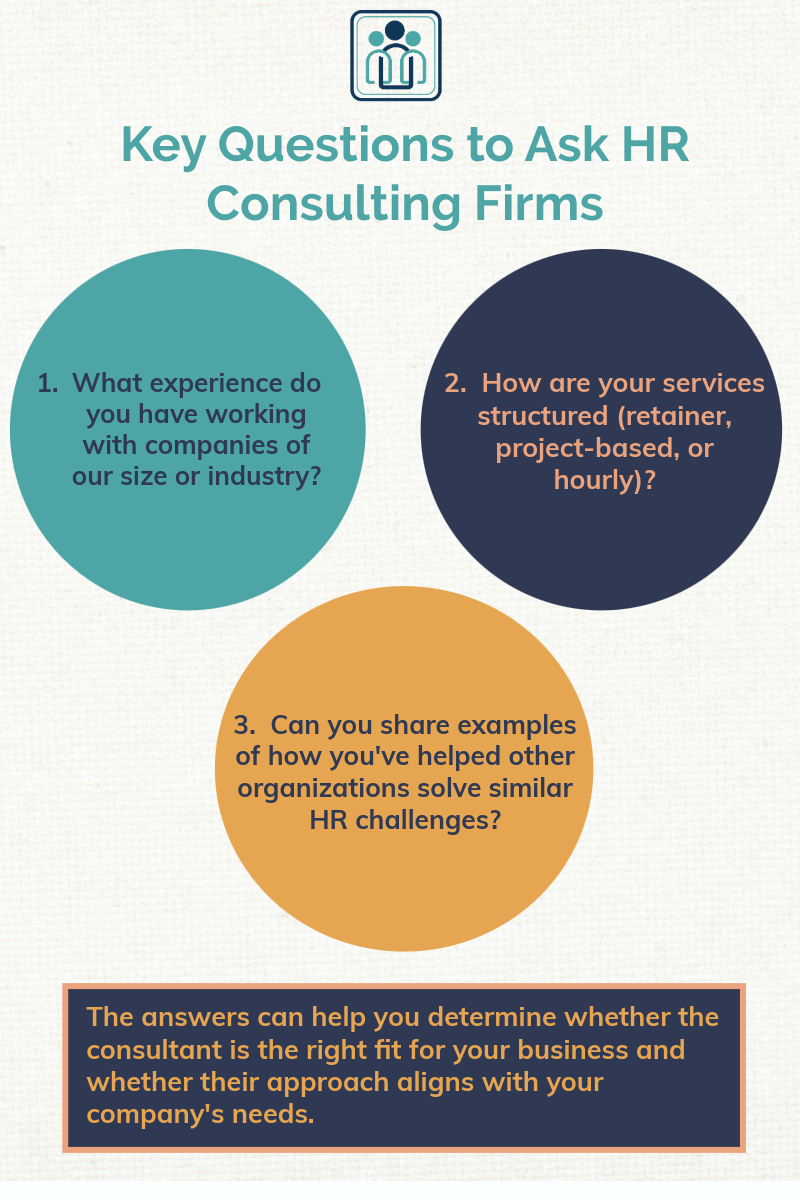
If you’re considering working with an HR consulting firm—or comparing options among various HR consulting firms—it’s helpful to ask a few key questions:
- What experience do you have working with companies of our size or industry?
- How are your services structured (retainer, project-based, or hourly)?
- Can you share examples of how you’ve helped other organizations solve similar HR challenges?
The answers can help you determine whether the consultant is the right fit for your business and whether their approach aligns with your company’s needs.