Menopause isn’t a traditional topic for company policies or manager training, but that is changing as some states introduce new workplace protections.
Unlike certain women’s health issues such as maternity leave, menopause is a topic that may not have made its way into company policies or manager training. That’s beginning to change.
New workplace protections in Rhode Island, Illinois and Philadelphia are bringing increased attention to how menopause and perimenopause symptoms can affect employees at work, and when employers may need to provide reasonable accommodations.
For employers, these changes are an opportunity to review accommodation practices, manager training and how health-related concerns are handled in the workplace.
New Workplace Protections Are Emerging
Rhode Island became the first state to enact workplace accommodation protections specifically addressing menopause in 2025. The law requires covered employers to reasonably accommodate menopause-related conditions when requested, unless doing so would create an undue hardship. Employers must also provide written notice of accommodation rights to new employees and within 10 days after an employee notifies the employer of menopause.
Illinois and Philadelphia have taken additional steps, with new requirements effective January 1, 2027.
Philadelphia amended its Fair Practices Ordinance to prohibit employment discrimination based on menstruation, perimenopause and menopause. Employers must also provide reasonable accommodations when related symptoms substantially interfere with job functions, provided the employee requests an accommodation and it does not create an undue hardship.
Illinois took a different approach. The Illinois Menopause Equity and Care Act updates the state’s existing accommodation framework to address menopause-related conditions. The law adds flexible scheduling, modified work hours and temperature-adjusted workspaces to examples of reasonable accommodations and requires existing employee notices to include menopause-related accommodation rights. Broader, standalone menopause-discrimination provisions proposed in earlier versions were removed before enactment.
While these protections apply only in certain jurisdictions, employers nationwide should pay attention to this growing trend.
What Should Employers Should Know
Menopause often occurs when employees are well established in their careers, and symptoms can affect workplace productivity and retention.
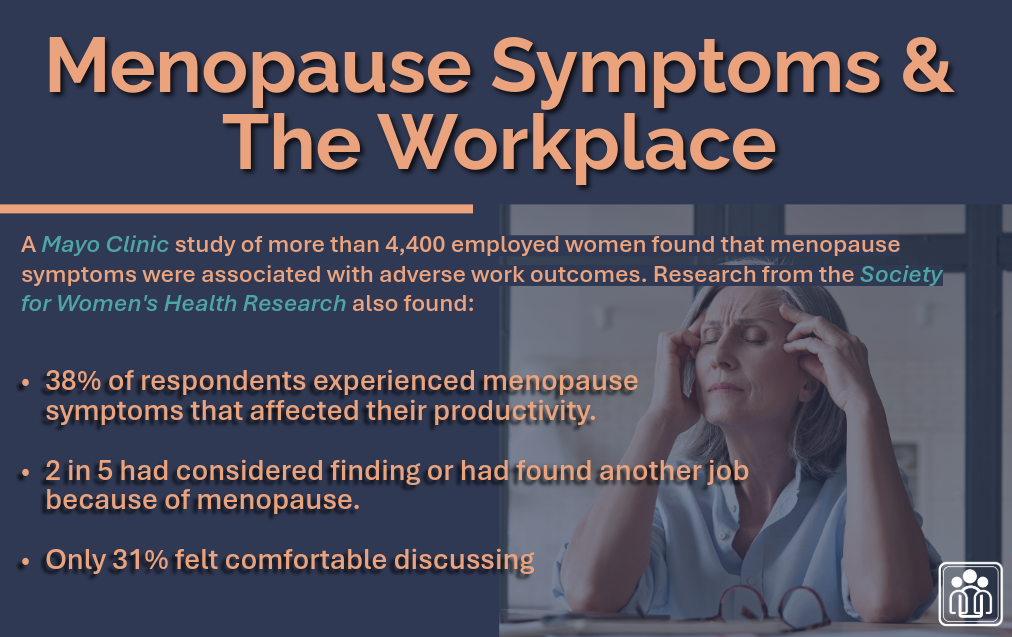
A Mayo Clinic study of more than 4,400 employed women found that menopause symptoms were associated with adverse work outcomes. Research from the Society for Women’s Health Research also found that:
- 38% of respondents experienced menopause symptoms that affected their productivity.
- Two in five had considered finding or had found another job because of menopause.
- Only 31% felt comfortable discussing menopause symptoms at work.
These findings highlight why employers should recognize that employees may experience legitimate workplace limitations without specifically requesting an accommodation.
Question & Answer
How Do the ADA and PWFA Apply to Menopause?
Answer: Even without a menopause-specific employment law, employers may have obligations under existing federal protections.
Menopause itself isn’t automatically considered a disability under the Americans with Disabilities Act (ADA). However, symptoms or related medical conditions may qualify as disabilities depending on their impact on major life activities. When the ADA applies, employers may need to consider reasonable accommodations unless doing so creates an undue hardship.
The Pregnant Workers Fairness Act (PWFA) requires accommodations for qualifying limitations related to women’s health, such as pregnancy, childbirth or related medical conditions. However, menopause is not automatically covered under the federal PWFA simply because Illinois incorporated menopause-related language into its existing pregnancy accommodation framework.
Depending on the circumstances, a menopause-related request may fall under state or local law, the ADA, or both.
Employees also don’t have to specifically mention the ADA or use the term “reasonable accommodation,” and the typically don’t. Managers should be trained recognize potential requests and involve HR for further evaluation.
What Could a Menopause Workplace Accommodation Look Like?
Answer: Depending on the employee’s limitations and job responsibilities, potential accommodations could include:
- Flexible schedules or modified work hours;
- Additional breaks;
- Fans or temperature adjustments;
- Temporary modifications to job duties;
- Remote work when appropriate; or
- Private spaces to manage symptoms.
Employers should evaluate requests individually rather than making assumptions about an employee’s abilities.
What Should Employers Do Now?
Answer:
- With new protections taking effect in Illinois and Philadelphia on January 1, 2027, affected employers should review their workplace policies, accommodation procedures and employee notice requirements.
- Employers elsewhere should also ensure managers know how to recognize potential accommodation requests, maintain confidentiality and involve HR appropriately.
- As menopause-related employment protections continue to develop, employers don’t have to wait for new legislation in their state to establish thoughtful, consistent and compliant accommodation practices and workplace policy.