Artificial intelligence is transforming the way employers manage human resources. From drafting employee handbook policies to answering questions about leave laws and workplace regulations, AI has become a valuable tool for HR research.
But when it comes to HR compliance and employment law compliance, AI should be used with caution.
Employment laws are complex and constantly evolving. Federal, state, and local regulations often overlap, and the correct answer depends on the specific facts of each situation. While AI can quickly summarize information and identify relevant regulations, it cannot evaluate your organization’s unique circumstances, assess legal risk, or apply the professional judgment required to make sound employment decisions.
That’s where experienced HR professionals make the difference.
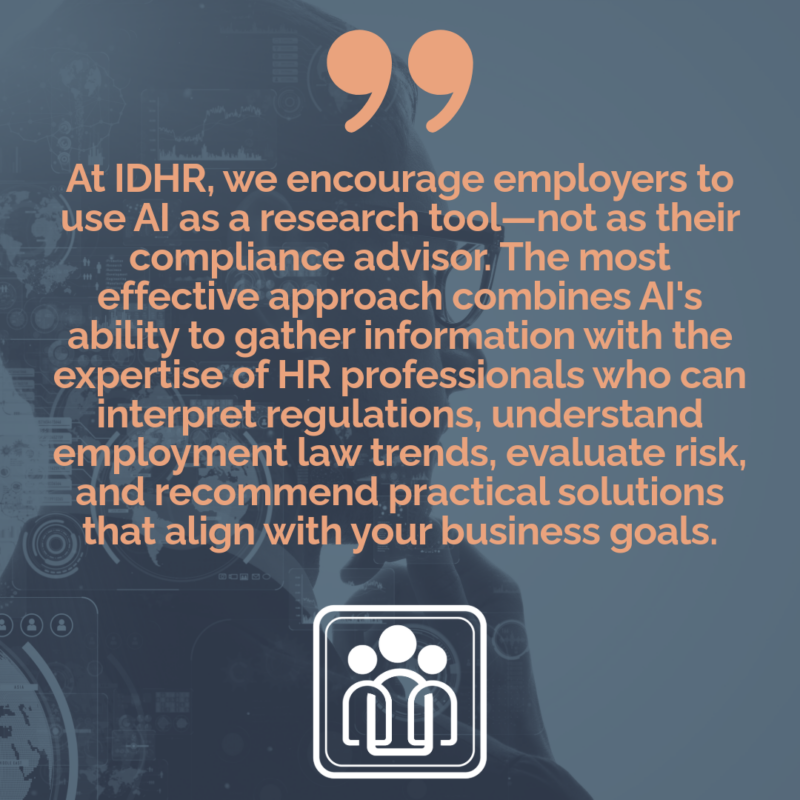
At IDHR, we encourage employers to use AI as a research tool—not as their compliance advisor. The most effective approach combines AI’s ability to gather information with the expertise of HR professionals who can interpret regulations, understand employment law trends, evaluate risk, and recommend practical solutions that align with your business goals.
This is especially important for small businesses, where owners and managers often wear multiple hats and don’t have a dedicated HR department. A quick AI answer may seem helpful, but relying on it without proper review can lead to costly compliance mistakes involving wage and hour laws, employee leave, discrimination, hiring, workplace policies, or documentation.
Our role is to help employers move beyond simply finding information. We help organizations understand what the law means, how it applies to their workplace, and the compliance considerations associated with different courses of action. AI can help you find information. IDHR helps you interpret this information, assess compliance risks, and provide practical recommendations grounded in HR best practices so you can make informed business decisions.